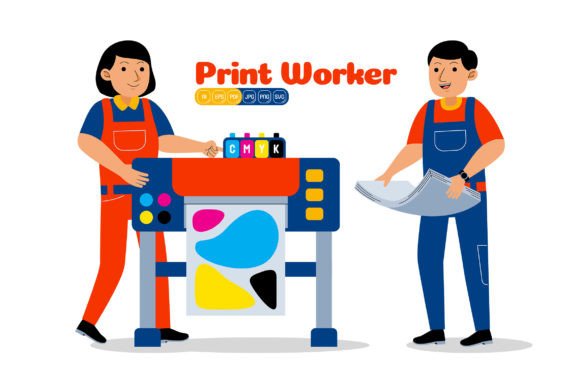
Man and Woman Print Worker Profession: A Designer's Review
As a designer who spends more time staring at stitch maps than most people care to admit, I approach every new machine embroidery design with a mix of excitement and skepticism. When I first pulled up the Man and Woman Print Worker Profession file on my screen, my immediate reaction was one of appreciation for its versatility. This isn't just a cute clipart image; it is a robust graphic asset that translates surprisingly well into the tactile world of thread and fabric. For those of us running small shops or managing custom orders, finding a design that balances professional appeal with stitching practicality is rare. This review breaks down how this specific illustration performs when moved from the digital realm of Illustrations and Graphics into a real-world embroidery project.
First Impressions and Visual Personality
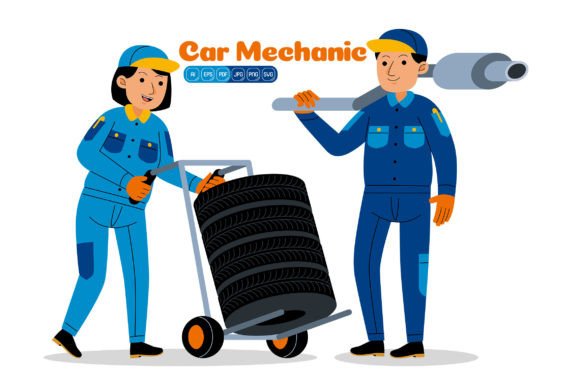
The initial mood created by the Man and Woman Print Worker Profession design is one of industrious charm. It captures the essence of craftsmanship without feeling outdated or overly cartoonish. The layout is clean, with defined shapes that suggest where satin stitch borders and fill stitch areas would naturally fall. As an experienced reviewer, I look for clear separation between elements, and this design delivers. The figures are distinct, making it easy to visualize how different thread colors will interact. Whether you are aiming for a vintage print shop vibe or a modern industrial look, the visual personality here is adaptable. It feels like a design that belongs on high-end custom apparel rather than a cheap novelty item.
Real-World Application: The Custom Tote Scenario
To truly test a design, you have to imagine it on a physical product. Let's say I am preparing a batch of canvas tote bags for a local printing collective. They need something that says "we make things" without being too literal. The Man and Woman Print Worker Profession fits this brief perfectly. On a sturdy cotton canvas, the design would likely require a medium-weight cutaway stabilizer to prevent puckering, especially if the fill areas are dense.
In this scenario, the scalability mentioned in the product description becomes crucial. Since the file can be easily resized, I could scale it down to fit a 4x4 hoop for a pocket detail or expand it for a full back-panel statement on a heavy-duty apron. The ability to change colors means I can match the thread precisely to the client's brand palette, ensuring brand consistency. For an Etsy seller or boutique owner, this flexibility allows you to offer personalized options without needing to redraw the entire digital embroidery file. Imagine offering these totes in natural canvas with navy thread, or black canvas with gold metallic thread—the design holds up in both contexts.
Versatility Across Products
Beyond tote bags, this design has strong potential for various handmade products. It would make an excellent embroidered patch for workwear jackets, adding a touch of personality to uniform policies. For those focusing on home goods, picture this stitched onto a linen tea towel or a decorative pillow cover in a home office. The theme resonates well with creators, making it a thoughtful personalized gift for writers, artists, or anyone who works with their hands. Even in the realm of baby embroidery, if scaled appropriately and simplified, it could adorn a nursery bib or a growth chart, celebrating the future maker in the family. However, for sweatshirt embroidery, one must be mindful of the fleece texture; the details need to be large enough not to get lost in the loops of the fabric.
Technical Considerations and Fabric Challenges
While the design is strong, no embroidery file is without its constraints. When working with the Man and Woman Print Worker Profession, attention must be paid to stitch density. If the original graphic is converted into a high-density fill, it could become stiff on lighter fabrics like rayon or thin cotton. In such cases, I recommend testing the design on scrap fabric first. Check how the stitches lay on textured fabrics versus smooth ones. On a pique polo or a textured sweater, fine details might blur, so ensuring the outlines are bold enough is key.
Curved surfaces present another challenge. If you plan to use this on a cap, the center of the design needs to be free of extremely long stitches that might bridge gaps poorly on the curved brim area. Similarly, dark fabrics require careful selection of underlay stitches to prevent the background color from showing through the lighter thread colors of the design. Always compare light and dark fabric backgrounds during your mockup phase. If the design includes any tiny lettering or intricate corners, verify that your machine can handle the resolution at your intended size. A design that looks crisp on a 6x10 hoop might lose definition if shrunk too small for a 3x3 hoop.
Enhancing Value and Professionalism
The ultimate goal of any craft business is to deliver a finished product that exudes quality. Using a well-structured design like Man and Woman Print Worker Profession directly impacts customer trust. When a client sees clean lines, consistent coverage, and no bird-nesting, they perceive higher value. This design aids in that perception because its clear forms lend themselves to neat stitching. For commercial embroidery projects, consistency is everything. If you are producing fifty shirts for a team, this design's repeatability ensures every unit looks identical, reinforcing professionalism.
Furthermore, for digital product sellers, this asset serves as a fantastic base for printable mockups. You can showcase how the design would look on various garments before even threading the needle, helping customers visualize the end result. This bridges the gap between the digital sales pitch and the physical reality of the small shop product.
Final Designer Notes and Best Practices
Before committing to a full production run with Man and Woman Print Worker Profession, there are a few essential steps to take. First, always review the specific license terms. While the description allows for countless variations and commercial use in illustrations, confirm whether the digital embroidery file version specifically permits resale as a finished physical good or if there are restrictions on selling the digitized file itself.
- Test Stitch-Outs: Run the design on the actual fabric you intend to use. What works on quilting cotton may fail on stretchy jersey.
- Check Contrast: Ensure your chosen thread colors provide enough contrast against the fabric, especially for the finer details of the workers' tools or clothing.
- Stabilizer Selection: Match your stabilizer to the fabric weight. Heavier designs need stronger support to maintain shape after washing.
- Detail Inspection: Zoom in on the digitized version. Look for potential jump stitches that might need trimming or areas where the stitch direction might cause shading issues.
- Holiday and Seasonal Twists: Consider adapting the colors for holiday embroidery themes, such as using red and green threads for a festive workshop vibe.
In conclusion, the Man and Woman Print Worker Profession is a standout choice for designers looking to add a narrative element to their work. It respects the intelligence of the viewer and the capabilities of the embroiderer. By understanding its strengths in scalability and its limitations regarding fabric texture, you can leverage this design to create stunning, market-ready items that celebrate the art of making.